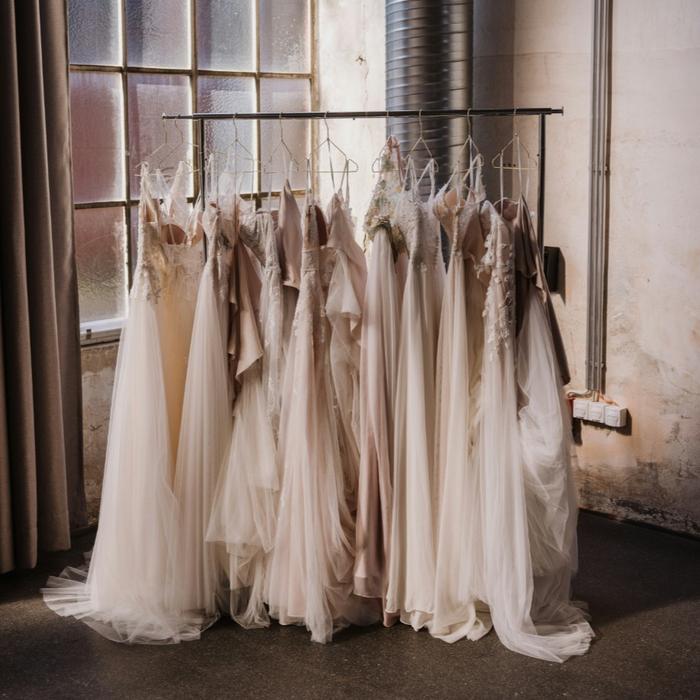
Two A-line wedding dresses can look entirely different. Picture one in crisp ivory mikado with a square neckline and deep skirt pleats. Now picture one in soft tulle with scattered floral appliqué and sheer sleeves. Both skirts widen towards the hem. The first dress has a clean, structured look, while the second feels softer and more romantic.
When you’re comparing wedding dress styles, look at the silhouette first. That’s the outline the dress makes on the body. Then look at the aesthetic, or overall feel, which comes from how the shape, fabric and details work together. If you like the skirt in one photograph and the neckline in another, you’re already learning something more specific than “I like classic dresses.”
Six different wedding dress styles to explore
Classic wedding dresses
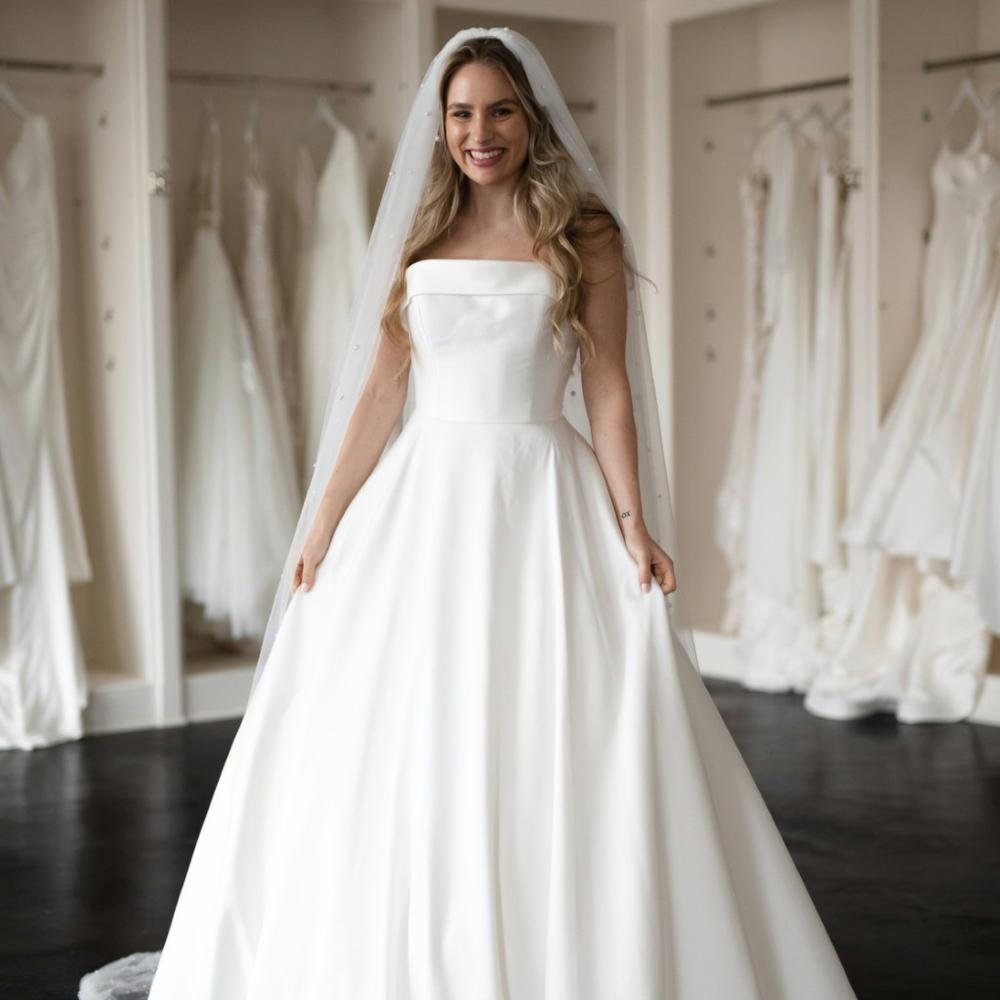
A classic bridal look often starts with a clear waistline, balanced proportions and familiar details, such as a square neckline, neat pleats or a row of covered buttons. Picture a satin A-line with a fitted bodice, a skirt that opens into broad folds and a simple train. Smooth fabric gives each of those details space to stand out.
Classic can also include lace or a full ballgown. A dress with a lace bodice and a plain satin skirt can feel formal and composed because the pattern is concentrated at the top. If you like the shape of a traditional gown but want a simpler finish, compare the same outline with plain sleeves and lace sleeves to see how much decoration you want around your face and shoulders.
Romantic wedding dresses
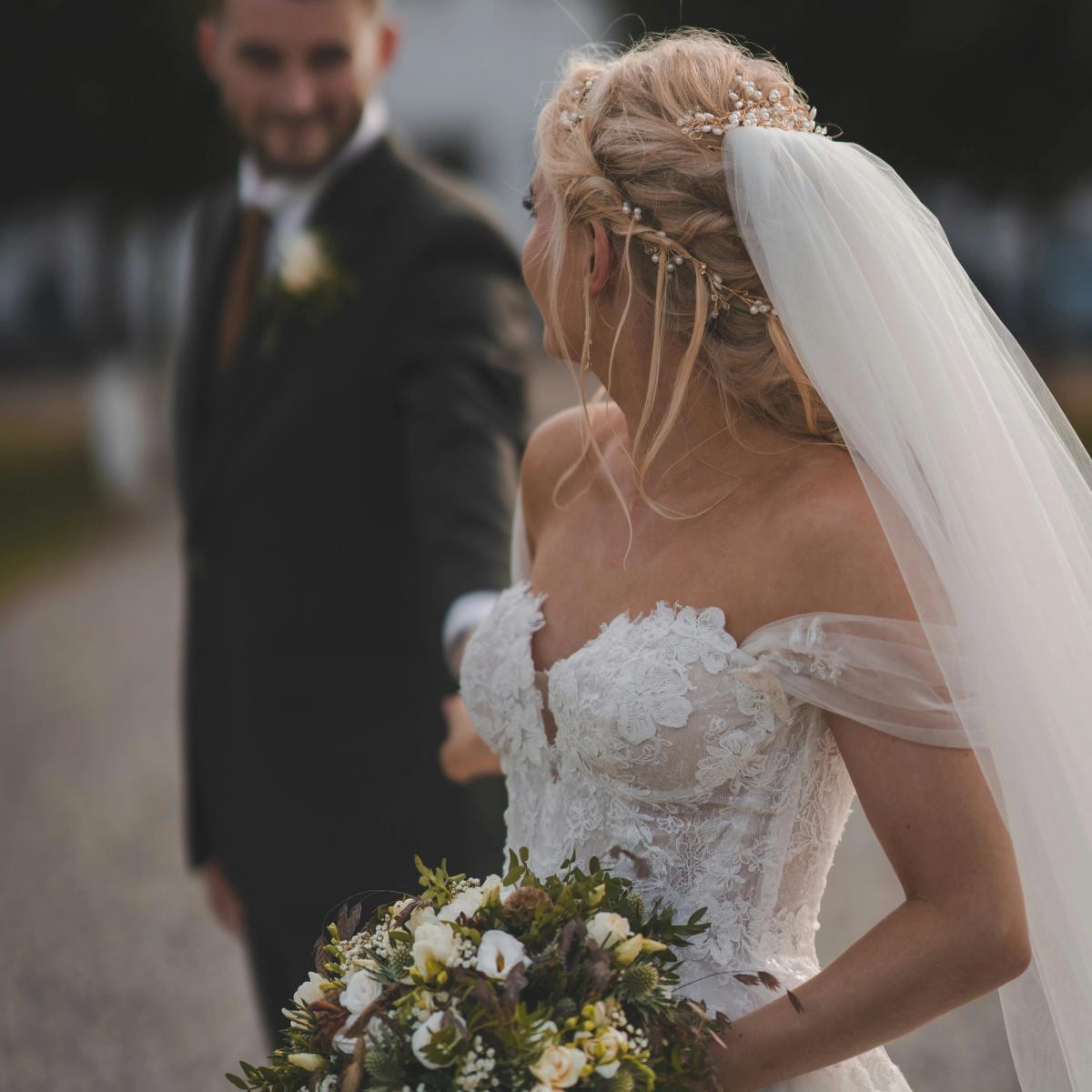
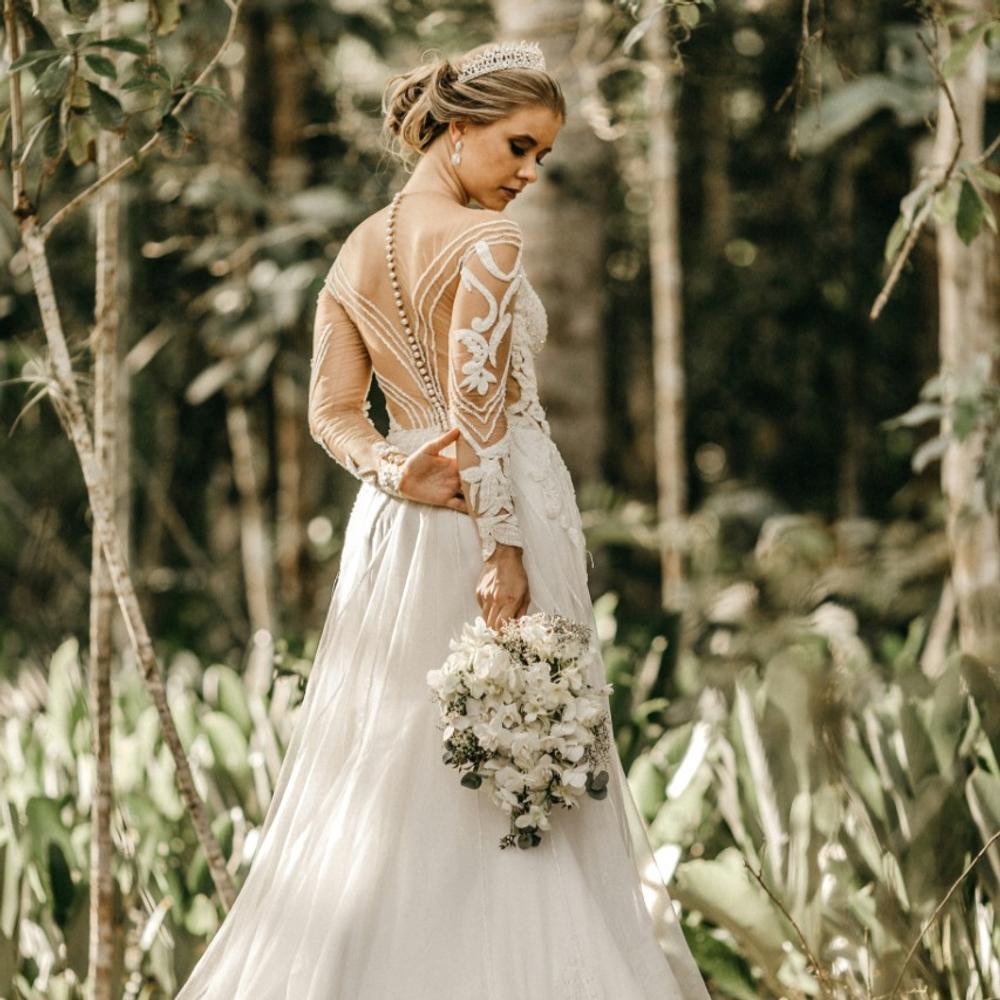
Soft layers, rounded lines and floral details can bring a romantic feel to both slim and full skirts. An A-line skirt made from layered tulle can look soft at the edges. A sweetheart neckline, with its two rounded curves and centre dip, echoes that softness. Floral appliqué can run densely over the bodice and become more scattered down the skirt, so the pattern seems to fade into the fabric.
For a quieter version, try a skirt in a fluid fabric with sheer sleeves gathered at the wrist. If you like a romantic gown in a close-up, find a full-length photograph too. A flower that looks bold up close may read as subtle texture at ceremony distance.
Minimalist wedding dresses
With fewer decorative details, the cut and surface of the fabric are easier to see. A matte crêpe sheath might rely on one long seam and a clean neckline. A plain mikado ballgown can also feel minimalist when broad pleats and a full shape carry the look. The first feels understated through its narrow outline. The second makes a statement through volume.
Notice which simple dresses you keep saving. You might like a smooth front with buttons only at the back, or an unbroken column with a single fold across the bodice. Those are different preferences even though both fit under the minimalist label.
Bohemian wedding dresses
Bohemian bridalwear often brings together easy movement and visible texture. An A-line skirt with a loosely gathered tier, broader lace motifs and flutter sleeves has a different rhythm from a smooth formal gown. Openwork lace or trim can make the pattern stand out, especially when you can see the edge of the lace at the cuff or hem.
Bohemian and romantic details can overlap. Compare a skirt scattered with small floral appliqués with one edged in bold lace and cut in soft tiers. You might like the softness of both and prefer the more defined lace pattern of the second. Look for walking photographs or video if the swing of the skirt or sleeves is part of what you love.
Vintage-inspired wedding dresses
A vintage-inspired dress borrows from a period or a particular older design. That might be a 1930s-inspired bias-cut satin gown that skims the body, or a mid-century-inspired dress with a defined waist and a full, calf-length skirt. These give very different results, so naming the detail or era you like will help you search.
You can carry the reference through the whole dress or pick one element. A high neckline and covered buttons might be enough if you like the detail in an old family photograph. With a shorter hem, look at the shoes and skirt together in a full-length photo. How much leg and shoe you see becomes part of the proportion.
Contemporary wedding dresses
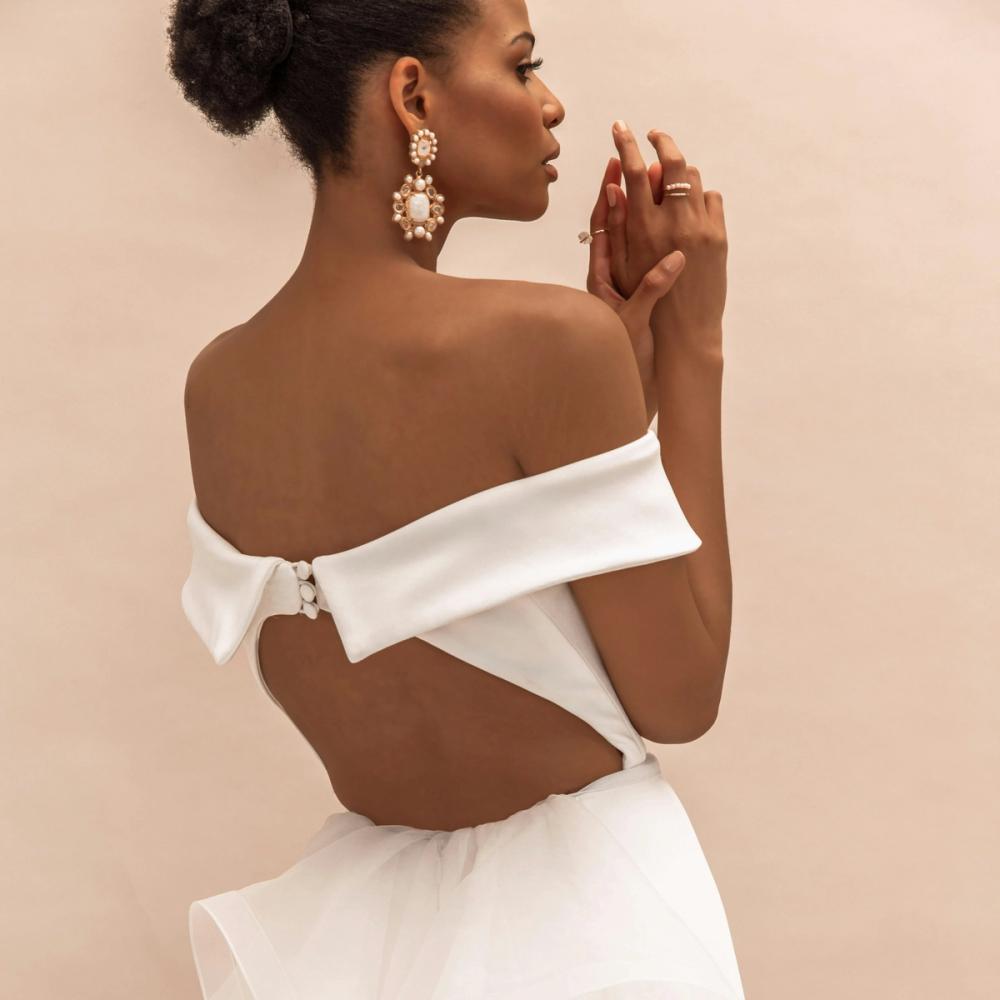
A contemporary look might use a sharply folded bodice, an asymmetric neckline, an exaggerated sleeve or a detachable overskirt. Often one design choice sets the direction. A single sculptural shoulder can give a plain sheath a strong outline, while a sheer overskirt can add a second shape over a short dress.
Contemporary can be spare or highly decorated. If you’re drawn to dresses with several bold features, compare where your eye goes first. You might love the oversized bow and prefer the rest of the dress plain, or want dense beading and a simpler shape to show it off. See asymmetric designs from both sides, since a front-facing photograph may hide the feature that gives the dress its character.
Wedding dress shapes and silhouettes at a glance
When comparing wedding dress silhouettes, follow the outer edge of the skirt from waist to hem. Where it widens tells you more than the label on the rail.
Hem length and train length are choices of their own. You can have a calf-length A-line, a floor-length one or an A-line with a train. If you like a gown’s outline in a photograph, check whether the skirt is spread out for the camera. A side view or walking shot shows how it takes up space when the wearer moves.
How fabrics, necklines and details change the look
Fabric changes how the shape behaves
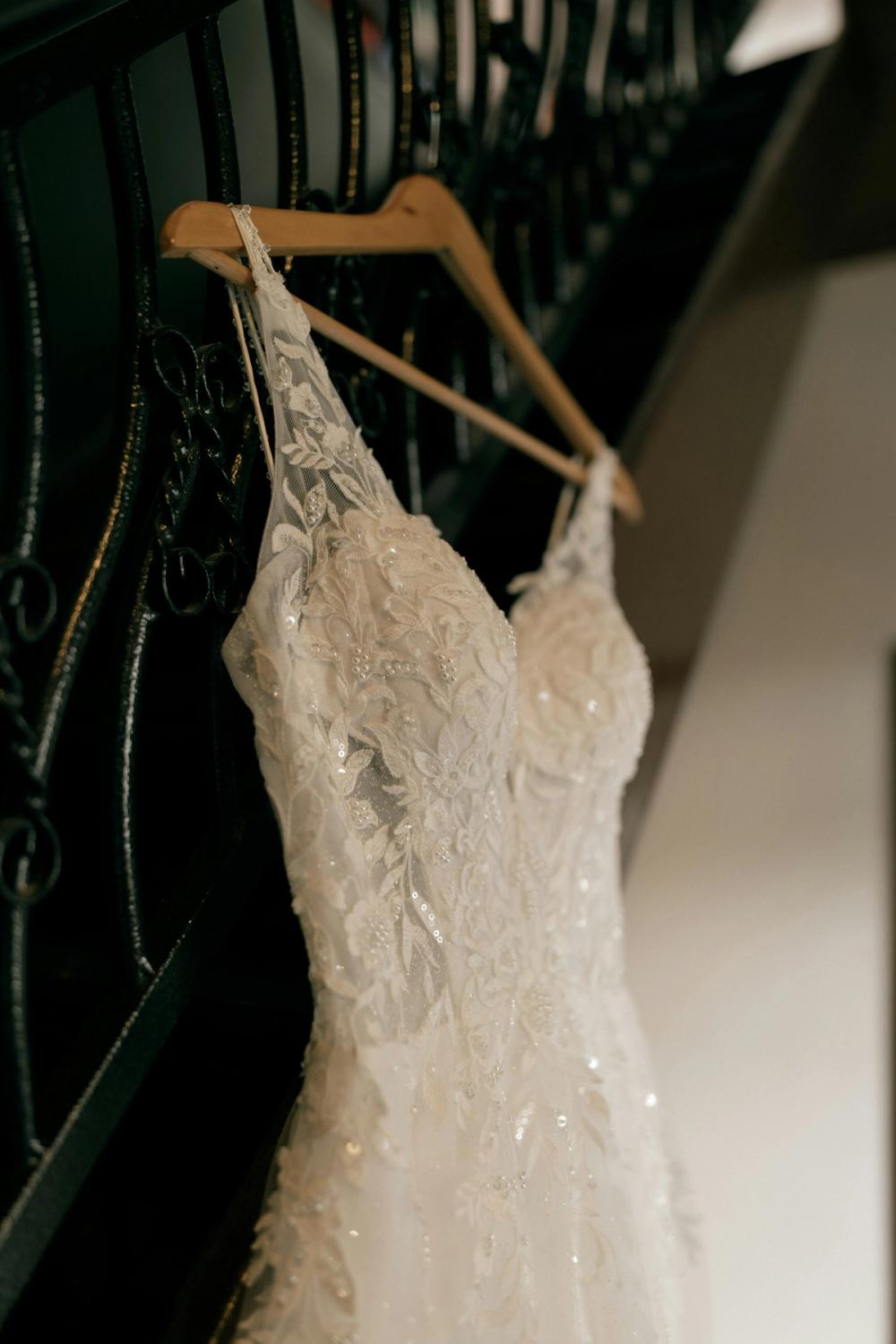
A firm mikado or duchess satin can give a skirt defined folds. A softer crêpe can skim the body, while chiffon can add movement as an overlay or flutter sleeve. Tulle is a net that can build soft volume in layers. Sheer organza can give a sleeve or overskirt a crisper outline. Specific fabrics vary in weight and finish, and the lining and underskirt also affect the result.
Compare fabric in a full-length photograph and a close-up. The long shot shows whether the skirt stands away from the body or hangs close. The close-up shows the shine, weave or lace pattern you may be responding to. If you can, look at samples in daylight and indoors, especially if you’re choosing between a matte finish and a sheen.
The neckline, sleeves and back work together
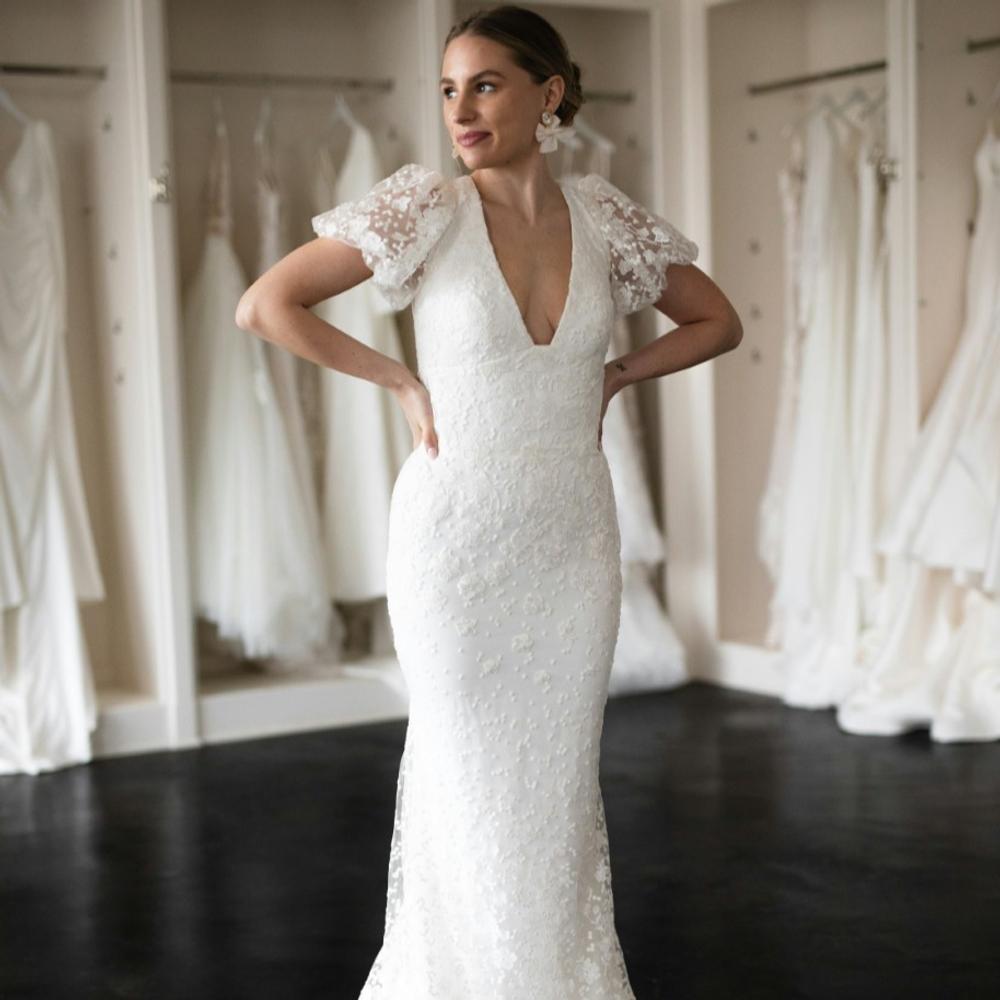
A square neckline introduces straight lines and corners. A sweetheart neckline uses curves, and a V draws the eye towards the centre. A high neckline frames more of the upper body. The effect depends on what sits alongside it. A square neck with long plain sleeves looks different from the same neckline with narrow straps and an open back.
Compare sleeve shape and transparency separately. A sheer fitted sleeve shows the arm with a layer of texture, while a puff sleeve adds volume around the shoulder. An off-the-shoulder cut can look open around the collarbones, but try reaching forwards and lifting your arms to see how the sleeve moves. If you want to wear a particular bra, check the back height and strap placement as well as the neckline.
Placement matters as much as the detail itself
Lace across the whole dress makes pattern part of the silhouette. Lace just on the sleeves leaves the bodice and skirt visually quieter. Appliqué consists of motifs attached to the dress surface, so individual flowers can be placed where you want them. Beads and sequins catch light. A few at the cuffs draw attention to the hands, while all-over beading changes the look of the whole gown and can add weight.
If you’re choosing between two dresses that feel similar, try them with and without a veil or other accessories. The detail you liked on the back might be partly covered during the ceremony, or the gown might already have as much texture as you want without adding anything else.
How to choose a wedding dress style that feels like you
Start with clothes you enjoy wearing. Think about whether you usually prefer sharp tailoring or soft layers, a defined waist or a straighter shape, plain cloth or visible texture. Those are starting points. Try something outside them if you’re curious.
Give each saved photograph a reason. Write a few words under the image, such as “straight neckline and wide straps”, “skirt that falls close to the hips” or “flowers only at the cuffs”. If your favourites have different silhouettes but nearly all have plain fabric, the finish may matter more to you than the shape.
Compare photographs that show the same thing. Put two full-length front views together to compare skirt shape. Use side and back views for trains, sleeves and fastenings. Set aside a photo you love for its lighting or styling, then ask whether you still want the dress with different shoes, hair or surroundings.
Test the dress in motion. Sit, take a long step, turn and lift your arms. Imagine climbing into the car, walking on gravel or dancing with your arms up if those are part of your day. Notice whether you can move comfortably without holding the bodice or adjusting a sleeve.
Write a short description of what you want. For example, you might want a softly structured A-line, a square neckline and plain fabric, with enough room to dance. Having a few clear preferences makes it easier to compare dresses and leaves room to change your mind when you try one on.
FAQ
What’s the difference between satin and silk on a wedding dress label?
Silk is a fibre. Satin describes a weave with a smooth face, often with a sheen. Satin can be made from silk or from other fibres. If you like the feel or finish, check the fibre content and look at the actual fabric, since satins vary in weight and shine.
Can a wedding dress be both classic and contemporary?
Yes. A full skirt with a neat waist can feel classic, while an asymmetric bodice gives the same dress a contemporary accent. It can help to choose which part of the design you want people to notice first.
Can I change the look between the ceremony and reception?
A removable piece can change where the eye goes or how much volume you’re wearing. Try a detachable overskirt for a fuller ceremony look, or a sheer topper if you want more coverage for part of the day. Try the base dress on its own as well, and check how the extra piece fastens and who can help you remove it.